Storage tanks
Describe the lining, accessible surfaces, residue thickness and planned cleaning access.
Industrial · 1:3 ↗ ™Request a tank job assessment ↗
Tank cleaning / Job assessment
Evaluate the deposit, surface and cleaning method.
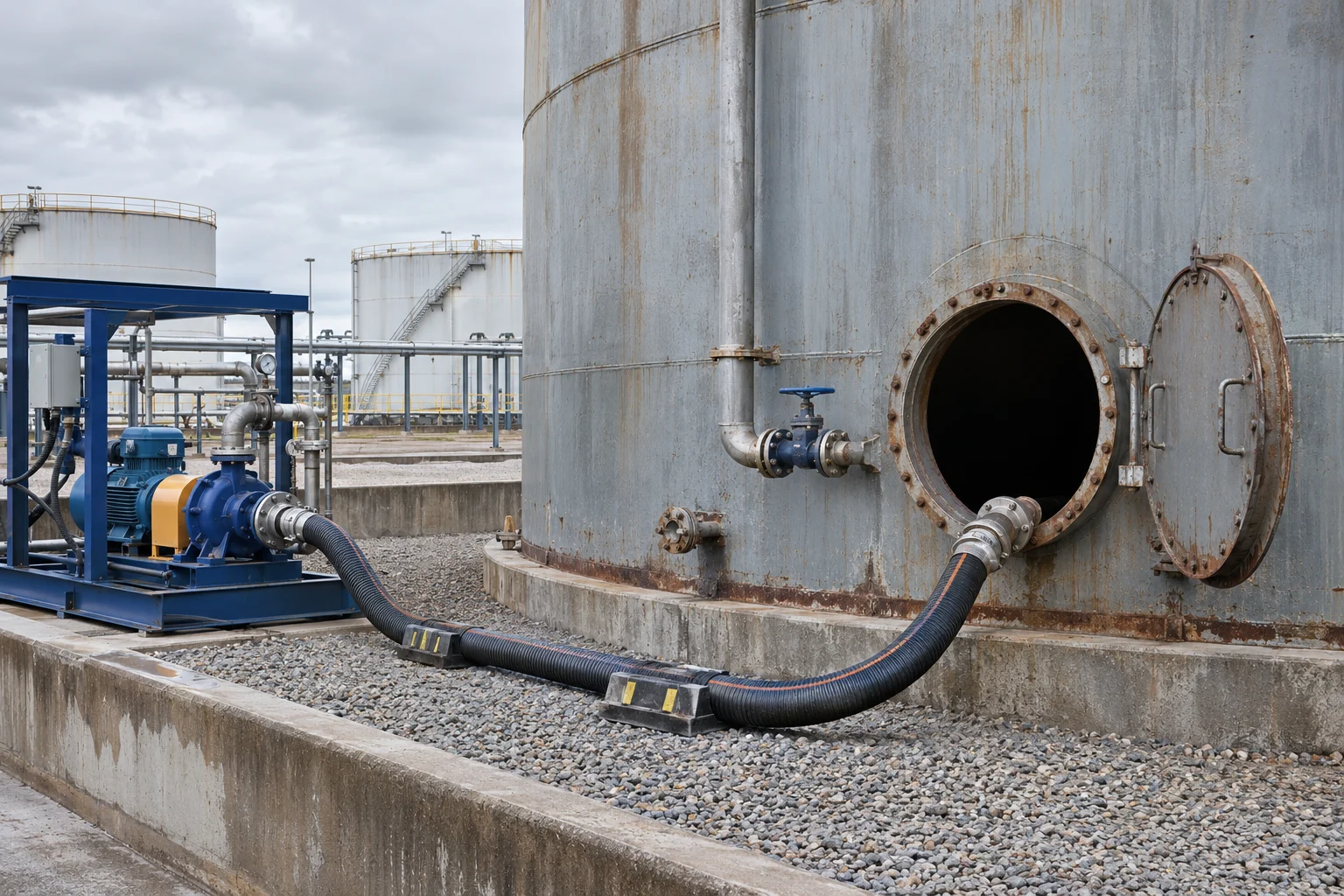
GreaseCheck is a neutral pH, water-based industrial degreaser supplied by LKA Industrial Solutions Inc. for evaluating oil-soiled tank cleaning tasks. Its Industrial working solution is mixed at 1:3. Paraffin-rich sludge, asphaltenes and mixed deposits need representative testing to establish cleaning performance, consumption and process conditions before a job is specified.
Job assessment
The 1:3 dilution is a starting point for evaluation. A full tank-cleaning procedure needs deposit and site data.
Describe the lining, accessible surfaces, residue thickness and planned cleaning access.
Industrial · 1:3 ↗Review construction materials, previous cargo, access and wash-water recovery arrangements.
Industrial · 1:3 ↗Provide a representative sample. Wax, heavy oils and mixed mineral residues may behave differently.
Industrial · 1:3 ↗Paraffin performance
The published Industrial TDS describes oils, grease, asphalt and bitumen deposits. It does not specify a paraffin melting temperature or a tank recirculation cycle.
Record oil, wax, solids and water content where known. Include deposit age, depth and tank history.
Evaluate cleaning response and material compatibility before setting concentration, temperature or contact time.
Include application, circulation equipment, rinse volume, recovery and waste handling in the job estimate.
Dilution & yield
Ratios are concentrate : water.
Add water first, then concentrate.
Final solution volume, not concentrate volume. Mixing assumes additive volumes. Follow the applicable TDS. Total job consumption depends on the deposit and cleaning method.
Product data / Site conditions
The SDS lists no flash point for the aqueous product and DOT shipping as not regulated.
Those properties do not describe the atmosphere or residues inside a previously used vessel. A tank-cleaning assessment must address the vessel, former contents and the planned work.
Product selection does not replace site isolation, atmospheric testing, entry controls or the contractor’s approved procedure.
Read Industrial SDS ↗Solvent replacement review
Use the current solvent’s SDS and measured site data. No generic diesel or xylene price is assumed.
| Compare | Current solvent process | GreaseCheck trial |
|---|---|---|
| Product properties | Review the exact product SDS and concentration. | Aqueous solution; flash point: none; DOT: not regulated. |
| Deposit removal | Record the accepted cleaning result and cycle. | Test the same deposit to the same clean standard. |
| Total use & cost | Include chemical, labor, recovery and disposal. | Measure concentrate, added water, rinse volume and waste. |
| Site controls | Review atmosphere, entry and residue hazards. | Review the same site conditions independently of product classification. |
Job planning
Record capacity, material or lining, access points, deposit coverage and previous contents.
Confirm removal response and compatibility. Do not infer heat, soak or recirculation settings from the dilution alone.
Set acceptance criteria, equipment, recovery and waste handling under the contractor’s site procedure.
The batch tool calculates concentrate and water for a chosen final solution volume. It cannot infer the volume needed to clean a tank from vessel capacity or deposit thickness.
The linked Industrial SDS/TDS describe the product and general use. They are not a validated tank recirculation or paraffin-removal procedure. Request a job assessment for application-specific conditions.
Technical documents
SDS and TDS for the concentrate and all three working solutions. PDFs hosted on greasecheck.com.
Working solution ratings do not replace the handling requirements for concentrate. Consult the sheet for the product you are using.
Tank Cleaning Job Assessment
Share the vessel details, deposit description and proposed cleaning method. Representative testing is needed for paraffin-rich or mixed residues before estimating chemical use or cycle time.
01 Describe the vessel, access and residue.
02 Review a deposit sample and surface compatibility.
03 Set the cleaning method and acceptance criteria.
Complete the details below to prepare an email to our team. Send the message from your email app to submit your request.